The Dark Origins of Disney Fairy Tales: The True Story
We all know the classic Disney animations. Snow White, Cinderella, and The Little Mermaid are films that entire generations have grown up with. We often associate them with lightheartedness, magic, and—above all—a happy ending, the famous “happily ever after.”
But did you know that most of these stories weren’t originally created by Walt Disney? Their roots reach back hundreds of years to old oral traditions, legends, and folk tales recorded by authors such as the Brothers Grimm, Hans Christian Andersen, and Charles Perrault. In their earliest forms, these stories weren’t even meant for children. They were shared among adults as cautionary tales and entertainment that reflected the harsh realities of life. Because of this, the originals often differ drastically from the sweet versions we know from the screen. They could be dark, unforgiving, and full of difficult moral lessons.
Let’s look at a few of the most popular examples and see how they changed over time.
1. Snow White
Disney’s first feature-length animation from 1937 is based on the Brothers Grimm fairy tale. In the film, the Evil Queen meets her end by falling from a cliff struck by lightning. In the original story, her punishment is much more severe and deliberate. The Queen is invited to Snow White and the Prince’s wedding, where she is forced to put on red-hot iron shoes and dance in them until she collapses.
Interestingly, in the original Grimm version, a magical kiss isn’t what wakes Snow White. The Prince decides to take the glass coffin with the princess back to his castle. During the journey, one of his servants stumbles, jostling the coffin just enough to dislodge the piece of poisoned apple from the girl’s throat, allowing her to breathe again.
2. The Little Mermaid
Disney’s The Little Mermaid is a story of dreams and love, culminating in a beautiful wedding with her beloved prince. Hans Christian Andersen’s original, however, is often considered one of the more heartbreaking tales in literary history.
In Andersen’s version, the mermaid decides to trade her tail for legs, but there’s a heavy cost: every step she takes causes her immense pain, as if she were walking on sharp knives. Worse still, the prince never falls in romantic love with her. He cares for her like a younger sister and eventually marries a princess from a neighboring kingdom. Despairing and unable to return to her life in the sea, the mermaid turns into sea foam. Andersen did add a slightly hopeful note at the very end, where she becomes a “Daughter of the Air,” giving her a chance to earn an immortal soul through good deeds—but the classic romantic happy ending is nowhere to be found.
3. Cinderella
Disney’s version stays quite faithful to Charles Perrault’s retelling, as he was the one who introduced the fairy godmother and the pumpkin carriage. But the Brothers Grimm also recorded this story under the name Aschenputtel. In their version, there is no fairy godmother. Instead, magical birds sent by the spirit of her deceased mother help her.
The fate of the stepsisters in this older German version is much harsher. Desperate to fit their feet into the golden slipper, one sister cuts off her toe and the other her heel. The deception is only revealed when the prince notices blood dripping from the shoe. To make matters worse, during Cinderella’s wedding, those same magical birds peck out the sisters’ eyes as a permanent consequence for their wickedness.
4. Sleeping Beauty
Here, too, we have versions from both Perrault and the Grimms. Disney drew from both but intentionally left out the second half of the story described by Perrault. In his version, the wedding with the prince is only the midpoint of the tale!
In Perrault’s continuation, the Prince hides his marriage from his own mother, who comes from a lineage of ogres. When he becomes king and finally brings his wife and children to the castle, his mother tries to eat her new grandchildren and Sleeping Beauty herself. Fortunately, a kind cook saves the day by secretly serving the Queen Mother animal meat instead. Eventually, the Queen Mother’s plot is discovered, and she meets her end in a vat full of vipers and toads.
5. Tangled (Rapunzel)
The story of Rapunzel in the Brothers Grimm version is also a bit more challenging than the cheerful Disney movie. When the witch discovers Rapunzel’s romance with the prince, she cuts off the girl’s beautiful hair and banishes her to a desolate wasteland.
The prince, completely unaware, climbs the tower on the cut-off hair only to meet the witch. In his despair, he leaps from the tower and falls into a patch of thorns that pierce his eyes. He wanders blindly through the world for years, subsisting on roots and berries, until he finally stumbles upon the wasteland where Rapunzel is living. They are reunited, and her tears of joy magically restore his sight.
Why were the originals so dark? (And why it might actually be a good thing)
Looking at these older versions, it’s easy to wonder why anyone would ever read them to children. However, many child psychologists and experts suggest that these darker themes actually served a vital purpose in child development.
Originally, these tales were meant to warn listeners about the very real dangers of the world—reminding them not to trust strangers or wander into the forest alone. But as they transitioned into children’s stories, they took on a psychological role. According to renowned psychologist Bruno Bettelheim, who wrote extensively on the subject, the scary elements in fairy tales provide a safe, symbolic space for children to process their own complex emotions.
Children often experience feelings they don’t fully understand yet, like jealousy, fear of abandonment, or anxiety. By projecting these fears onto a fictional “witch” or a “dark forest,” children can confront these feelings from a safe distance. Furthermore, these stories don’t pretend that life is perfectly easy. By showing characters who face seemingly impossible hardships and still emerge victorious, traditional fairy tales help build resilience. They teach children that while struggles are inevitable, they have the inner strength to overcome them.
Rediscover the classics with Super Stories
While there is profound value in the original tales, we also understand that every child is different. Some children might not be ready for the intense imagery of the older versions, and modern parents often look for a gentle middle ground.
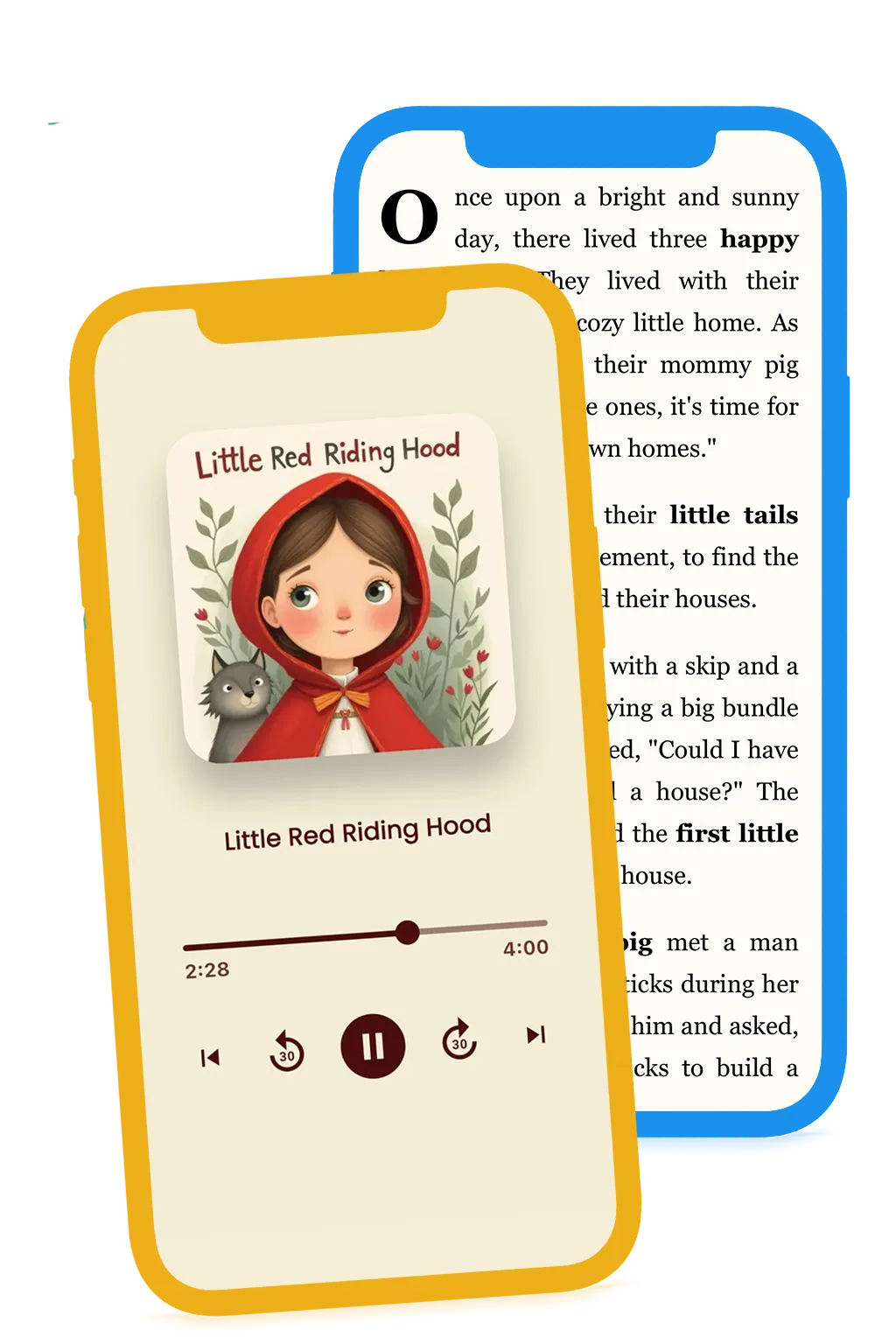
In the Super Stories app, you will find many of these classic stories carefully adapted for modern children. We have created our own versions of Cinderella, Snow White, and The Little Mermaid that retain the emotional depth, the moral lessons, and the magic of the originals, but are presented in a way that feels safe and supportive for young minds.
If your child loves Disney movies, they will surely enjoy listening to or reading about the adventures of their favorite heroes in our app. It’s a wonderful way to introduce little ones to the world of literature, showing them that these stories can offer comfort, excitement, and valuable life lessons beyond the screen.
Download Super Stories today and immerse yourself in the world of fairy tales!