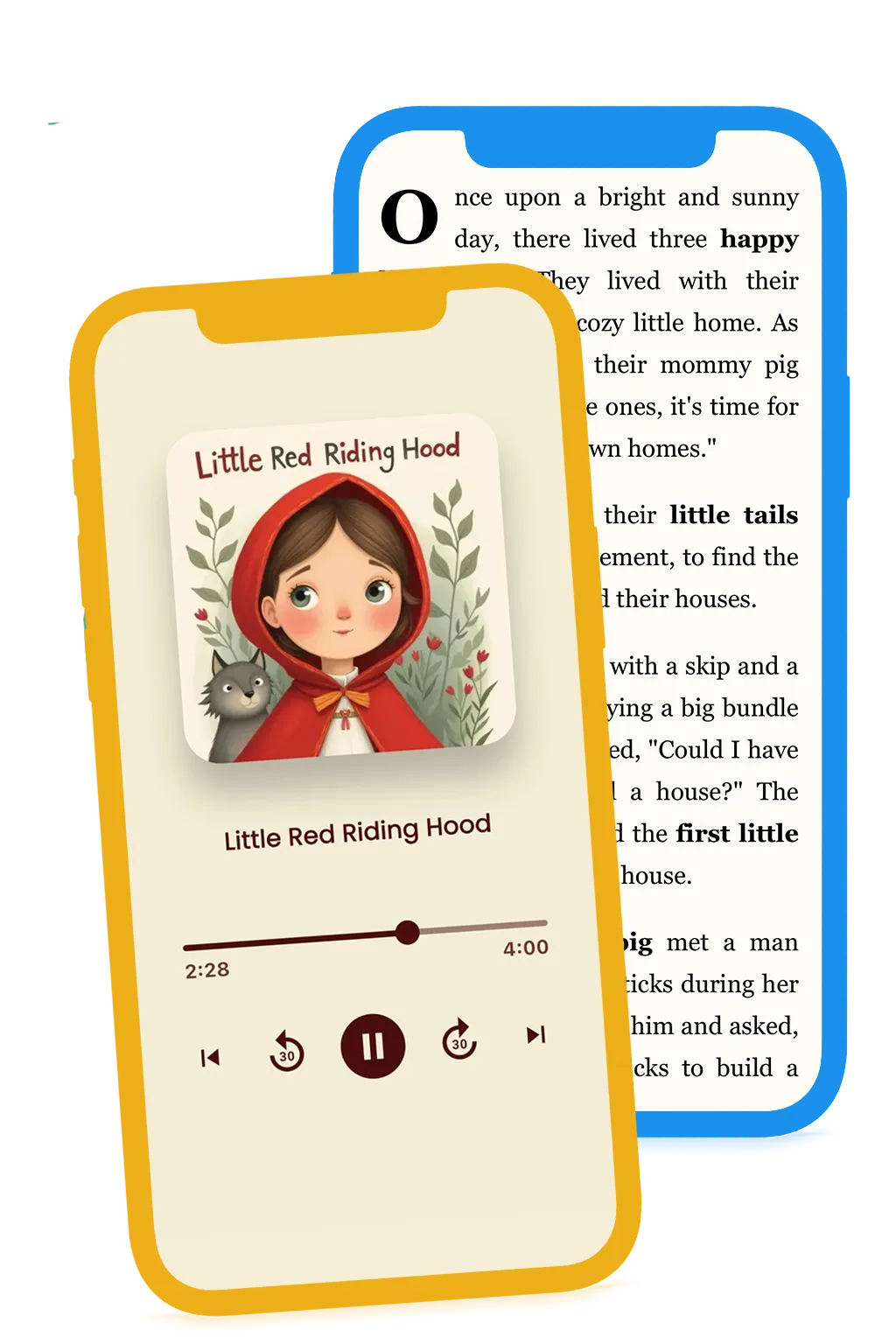
How to make reading together enjoyable for you and your child

You don’t need an actor’s voice or enough time to finish a whole book. What matters most is your attention and the pleasure of sharing a story. If your child interrupts, keeps returning to one picture, or asks for the same tale for the tenth time, that’s not a problem. It’s a starting point for reading in your own way.
What does reading together offer?
A book gives you a chance to discover new words, use your imagination, and talk about feelings. It also makes room for closeness: for a little while, you’re in the same story together. Research supports the language benefits. A meta-analysis of 19 studies found that programs teaching parents to share picture books supported children’s understanding and use of language.1
How can you make the most of this? These simple ideas draw on advice from Reach Out and Read, an organization that promotes shared reading through pediatric care.2
7 ways to enjoy reading together
1. Start with what interests your child
Cars, cats, or a trip into space? Offer two books and let your child choose. With a baby, you can point to clear pictures and name what they see. Try short, rhythmic texts for toddlers, and stories with adventure and humor for preschoolers.
2. Play with your voice, without putting on a performance
A mouse might squeak, a bear might grumble, and rain might patter as you tap your fingers on a blanket. A change of pace, a funny face, or a short pause can bring a story to life. If acting out characters isn’t your thing, use your usual voice. You don’t need acting skills to make reading lovely.
3. Have a conversation, not a quiz
Invite a younger child to point to the cat. With an older child, try “What do you think happens next?” or “Why did the fox feel sad?” Give them time to answer. If they say “dog,” you might add, “Yes, a big dog is chasing the ball.” Conversation naturally adds to their language. You don’t need a question on every page, or to interrupt a scene that’s holding their attention.
4. Follow your little reader’s lead
Want to spend longer looking at a picture? Stay there. Would your child rather tell the story from the illustrations than listen to the words? That’s a valuable way to enjoy a book, too. Toddlers don’t have to sit still. If interest fades or tiredness takes over, you can stop early and come back later.
5. Return to favorite stories
“Again!” can mean another chance to learn. In a small experiment, children who heard a repeated story were better at recognizing new words from it, even several days later.3 You don’t need to find a new title every day. Familiar stories also invite your child to join in with favorite lines.
6. Let your child take over part of the story
Let them turn the pages, copy animal sounds, or “read” the pictures. An older child might imagine what the character will do tomorrow. These small games make room for their ideas and let them help shape your time with a book.
7. Find a routine that suits you
Try reading each day, even if it’s just a few unhurried minutes. After breakfast, on the couch, or before bed might work. Put your phone aside and turn off the TV in the background. If you miss a day, simply return to a book at the next opportunity.
One story and a little time for each other are enough for today. Don’t count the pages. Notice the laughter, a question about a character, or a request to read it again. Those are the moments that can help a love of reading grow.
Sources and further reading
-
Dowdall et al. (2020), Shared Picture Book Reading Interventions for Child Language Development: A Systematic Review and Meta-Analysis, Child Development. A meta-analysis of 19 randomized studies of shared reading programs. ↩
-
Reach Out and Read, Family Resources: Reading tips. Advice on choosing books, talking, playing with your voice, and reading with children of different ages. ↩
-
Horst, Parsons, and Bryan (2011), Get the Story Straight: Contextual Repetition Promotes Word Learning from Storybooks, Frontiers in Psychology. An experiment with 16 children, looking at learning specific new words. ↩