Phones and children: when and how to introduce them

A call with Grandma, a photo of a beetle you found on a walk, a favorite audio story: a phone can be a useful family tool. Sharing a parent’s device is different from a child having a smartphone of their own. Treat those as two separate decisions, and begin with a simple question: what do we need the phone for right now?
When should you introduce screens to a young child?
There’s no rush to teach a little one how to use a phone. Conversation, movement, play, and exploring with all their senses matter most in the early years. The Canadian Paediatric Society recommends:1
- Before age 2: avoid screen time apart from video calls with familiar adults. Stay alongside your child during calls, helping them respond and show things that interest them.
- Ages 2-5: limit routine screen time to about an hour a day or less. That’s a limit, not a daily target. Count watching and playing across all devices, not just the phone.
If you introduce a screen, choose a short, age-appropriate activity and explore it together.
What can technology offer?
Connection, curiosity, and ideas for play. A video call can help your child stay in touch with grandparents. Looking at photos from a walk together might encourage a preschooler to tell you about it, while recording a song can be a fun way to create something.
Some apps can also help children practice specific skills. A review of 35 studies of apps for young children found promising results, particularly for early mathematics.2 Not every app labeled “educational” offers these benefits. Choose activities with a clear purpose, and take the play beyond the screen: after counting in an app, count the blocks on the rug.
When should a child get their own phone?
The American Academy of Pediatrics (AAP) doesn’t name one age at which a smartphone becomes safe for every child. With an older child, consider their sense of responsibility, how they handle impulses, and whether they’re ready to talk to you about what happens online.3
If the main need is keeping in touch after school, consider a basic phone without internet access. When the time comes for a more capable device, agree on rules and build independence gradually. Having a phone doesn’t have to mean immediate access to social media accounts or unrestricted browsing.
5 habits that make everyday use easier
Research on young children highlights not just time spent on screens, but also content and using devices together.4 In practice:
- Choose rather than leave it to chance. Check content first, favor ad-free options, and turn off autoplay for the next video.
- Take part. Sit with a younger child, comment, and ask what they’ve noticed. Conversation offers more than simply watching the clock.
- Make the ending clear. Let your child know when you’ll put the device away and suggest what to do next. Leave room for movement, sleep, and time with others, and use cuddles or conversation as ways to comfort them, too.
- Protect meals and bedtime. Put screens away at the table and at least an hour before bed. Include your own phone in the rule.
- Set up safeguards and keep talking. Enable approval for purchases and app installations. Show an older child how to protect private information and tell you about a worrying message. Parental controls help, but don’t replace staying connected.
A phone can be useful without anything to watch
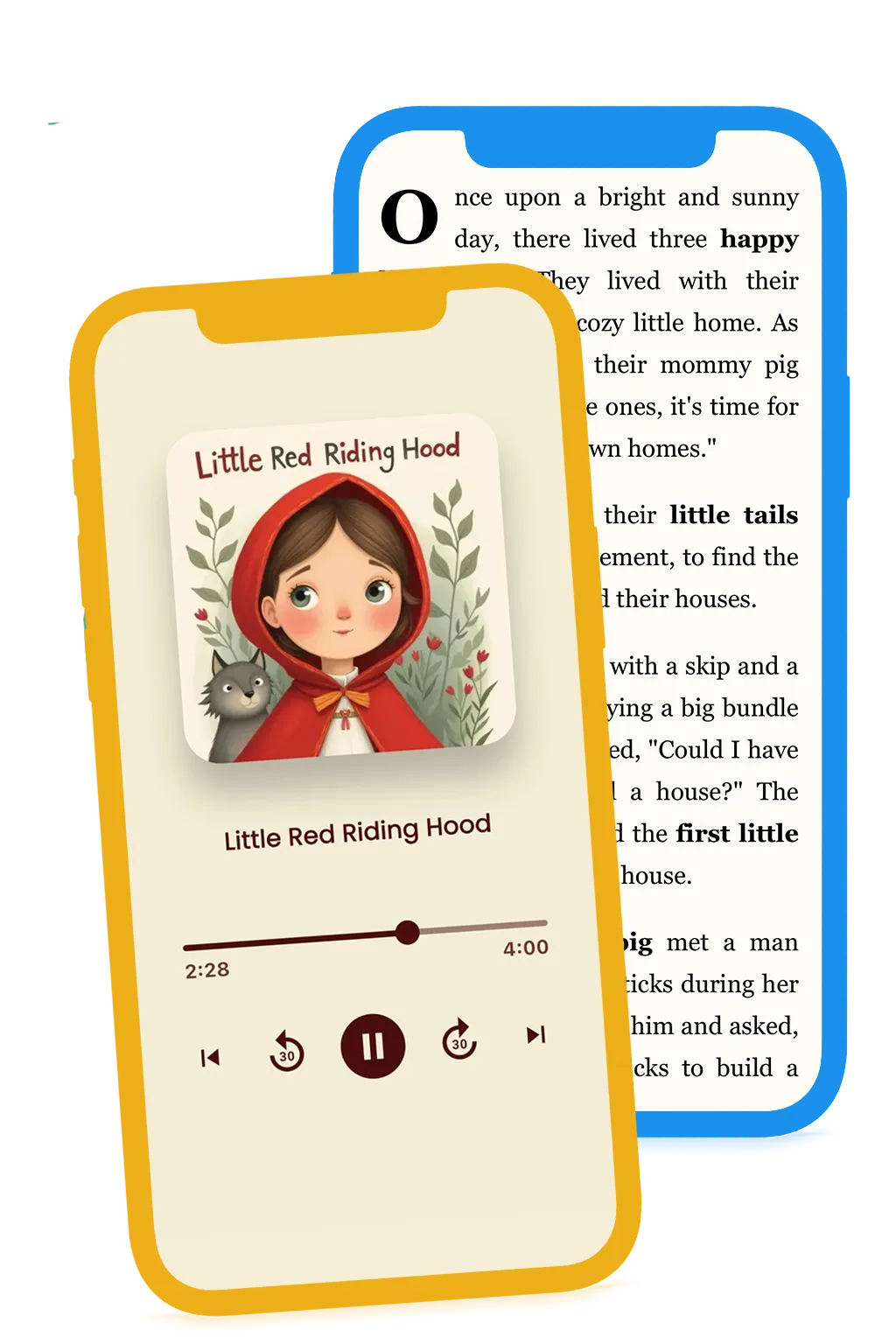
An audio story is one example. In Super Stories, you can choose a tale and then put the phone out of your child’s sight. They can listen while drawing or cuddling up with you. Listening without looking at a screen is not the same as watching, though it’s still worth leaving space for quiet, conversation, and free play.
This isn’t about perfect parenting without technology. It’s about using a device to help your family do something worthwhile, rather than letting it take the place of what matters.
Sources and further reading
-
Canadian Paediatric Society (2022), Screen time and preschool children: Promoting health and development in a digital world. Recommendations for young children covering age, shared use, and protecting sleep. ↩
-
Griffith et al. (2020), Apps As Learning Tools: A Systematic Review, Pediatrics. A review of 35 studies of specific apps; the findings cannot be extended to all educational content. ↩
-
Jenny Radesky, AAP (updated 2026), Your Child’s First Phone: Are They Ready?. Readiness for a personal device and simpler alternatives to a smartphone. ↩
-
Mallawaarachchi et al. (2024), Early Childhood Screen Use Contexts and Cognitive and Psychosocial Outcomes: A Systematic Review and Meta-analysis, JAMA Pediatrics. A review of research on the content and context of screen use among children under 6. ↩