Games for children: playful ideas to support their development
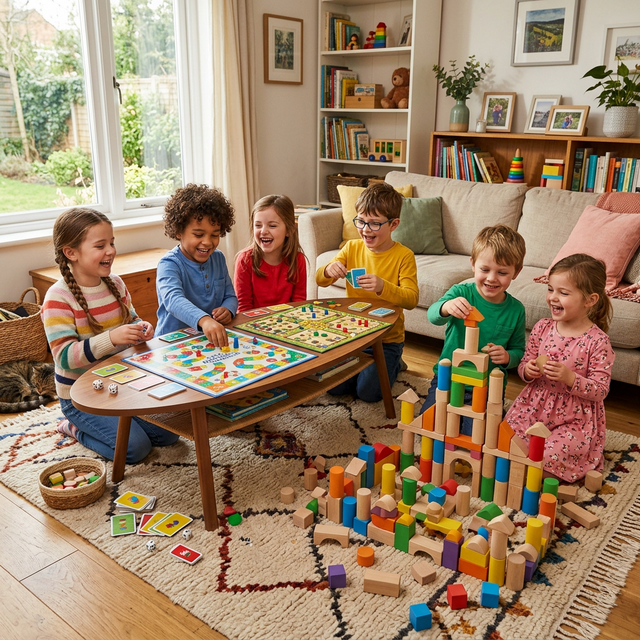
Games are more than something to do when children are bored. Through play, they practice cooperating and handling feelings, while using their imagination and movement skills. Here are some ideas for time together at home.
Why make room for games?
Well-chosen games give children practice in several areas:
- Thinking skills. Puzzles and logic games invite children to plan, consider possibilities, and solve problems.
- Social and emotional skills. Team games and board games involve working together, following rules, and handling the disappointment of losing.
- Movement. Active and hands-on games give children opportunities to coordinate their bodies and use their hands with care.
Games and activities to try at home
These ideas can start right in your living room:
1. Board games and card games
Games with simple rules are a good place to begin:
- Memory and Old Maid. These simple card games give preschoolers practice in remembering, noticing details, and paying attention. For Memory, start with a small number of pairs.
- Cooperative games. Instead of competing, players work together to defeat a dragon or build a tower. Working toward a shared goal gives everyone a reason to talk and listen.
2. Indoor movement games
Even a rainy day can include some active play:
- Hot and cold with letters or numbers. Hide cards as well as objects, then give “warmer” and “colder” clues. Finding the treasure becomes a chance to recognize familiar letters or numbers.
- A living-room obstacle course. Cushions become stepping stones, stable chairs become tunnels, and a blanket becomes a rushing river. Make a safe route that lets your child practice balancing while imagining an adventure.
3. Sensory and hands-on play
Let your child explore through different senses:
- A sensory treasure box. Hide small toys in a box of rice, beans, or pasta, then use spoons and bowls to dig them out. Scooping and picking things up give little hands practice. Use this only with children who no longer put objects in their mouths, and supervise closely.
- Construction toys and wooden blocks. Building invites children to imagine shapes and spaces. Trying different ways to connect or stack blocks can lead to a whole new game.
4. Games for imagination and communication
- Charades and “Who am I?” games. Act out an animal or describe a character for the others to guess. You can explore words, expressions, and gestures, with plenty of room for laughter.
- Shadow theater and pretend play. Make a small stage with chairs and act out a scene. It could come from everyday life or a story your child has invented.
Games inspired by stories
A good book can be full of ideas for play. If your child is fascinated by a knight’s adventures or a detective’s mystery, bring a little of that story into your home and make an adventure of your own.
In Super Stories, many tales come with ideas for games and activities connected to the plot. Choose one and let the story continue in your play together.
Whatever you choose, your presence and attention matter most. Now there’s just one thing left to do: play!