When and How to Introduce a Phone to a Child?

When is the right time to buy your child their first phone? This question keeps many modern parents awake at night. Today, technology surrounds us from all sides, so it’s worth considering how and when to wisely introduce your little one into the digital world—based on psychologists’ recommendations.
There is No One Perfect Age
Psychologists and child development experts agree: there is no specific date or age when a child “must” get a smartphone. Everything depends on the child’s emotional maturity, their sense of responsibility, and the family’s needs.
As a general rule, it is recommended that at the beginning, around 8-9 years old—if there is a need for contact due to unchaperoned returns from school or going to summer camps—parents should equip the child with a simple cell phone with a keypad, without constant internet access. This will allow for easy contact with the parent when needed without exposing the young brain to sensory overload.
The Smartphone – Why is it Worth Waiting?
When it comes to accessing a classic smartphone, most recommendations suggest waiting until the child is 12-13 years old. Early, uncontrolled access to media, games, and—above all—social media, can negatively affect concentration, sleep quality, and mental well-being.
However, if you decide to buy a smartphone, it is mandatory to introduce house rules—a so-called “family contract.”
Key Rules for Safe Phone Use:
- Purpose and Time Limits: Determine with your child that a smartphone is not just a toy. You must precisely set the screen time (e.g., an hour a day for younger children) and phone-free zones, such as the dining table during meals, or the bedroom at night.
- Parental Controls: It’s crucial to block access to age-inappropriate apps and control content. Remember that the minimum age for most social media is 13 years old.
- Safety Education: The internet is an amazing place, but it requires explicit conversations about data safety and contacting strangers.
- Setting an Example: The most effective form of teaching is leading by example. A parent constantly staring at a smartphone screen won’t be an authority in teaching moderation.
The Hybrid Approach: An Alternative from Super Stories
What about younger children? The best solution seems to be a hybrid approach, which we successfully employ in Super Stories.
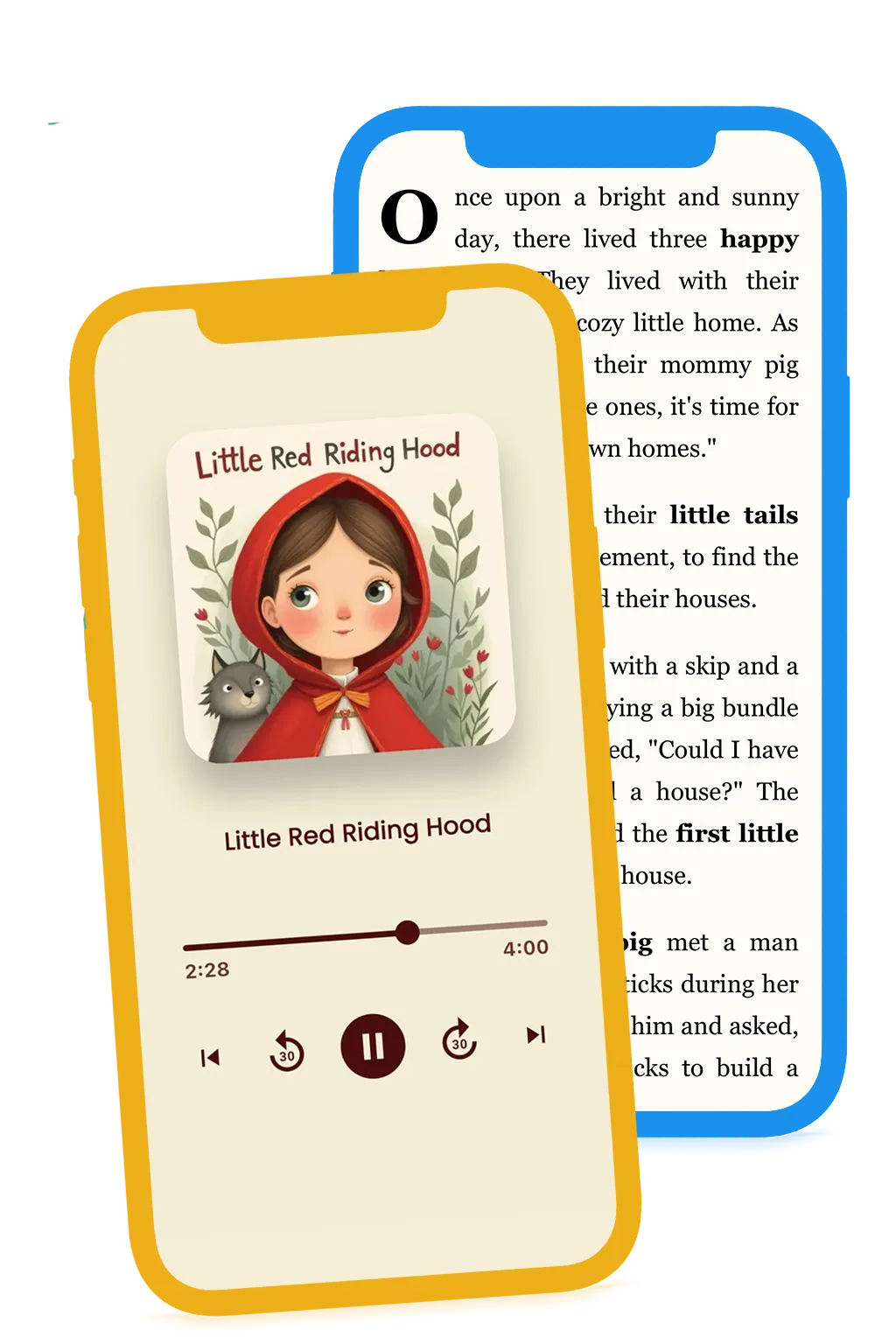
In this model, the phone primarily serves as an accessory managed by the parent, rather than the child’s main entertainment center. Our app was designed so that adults largely operate it, selecting appropriate content. Crucially, the app features robust protections, such as blocks against unexpected micropayments.
In our approach, the parent should be the main user of the phone (to hit play on a story, trigger a favorite lullaby, or print coloring pages). Meanwhile, the child enjoys the stories—for instance, in the form of an audiobook or reading from printed paper. Children should wait to handle the app directly until they grow older and develop the capacity to safely navigate the device independently. This ensures that stepping into the digital world is gentle, safe, and balanced—without overshadowing the real, physical world where children build their imaginations!