When the Screen Won't Turn Off Without a Fight

You're not a bad parent for letting them watch. Here's how to take back control — gently.

The Problem

It’s Saturday morning. You handed them the tablet 45 minutes ago so you could drink one cup of coffee in peace. Now it’s been two hours, they’re glued to the screen, and when you finally say “time’s up” — the meltdown is instant. Tears, screaming, maybe a thrown remote. You’re standing there thinking: how did we get here?

If screens have become a daily battle in your house, you’re far from alone. Nearly every parent today is navigating something no previous generation had to deal with: a device in their child’s hands that’s specifically designed to be impossible to put down. It’s not just cartoons anymore — it’s algorithms, autoplay, and dopamine loops that even adults struggle to resist. So when your three-year-old melts down because you turned off YouTube, that’s not a character flaw. That’s brain chemistry.

Here’s what matters: this isn’t about banning screens entirely (that ship has sailed for most families, and that’s okay). It’s about understanding what screen time is actually doing to your child’s developing brain, and learning a few practical strategies that make the whole thing manageable — without turning every day into a negotiation.

Why It Happens

The dopamine loop they can't escape

Children's apps and videos are engineered to trigger dopamine — the brain's reward chemical — over and over. Bright colors, fast cuts, surprise reveals, reward sounds. A child's developing prefrontal cortex simply doesn't have the braking power to say 'enough.' They're not choosing to ignore you. Their brain is literally hooked.

No clear boundaries around when and how long

When screen time doesn't have consistent rules, children push for more every single time. If it's 30 minutes on Monday and an hour on Tuesday and 'just a bit more' on Wednesday, the child learns that limits are negotiable. And they'll negotiate harder than any lawyer you've met.

Screens as the default boredom-filler

When a screen becomes the go-to response every time a child says 'I'm bored,' they gradually lose the ability to entertain themselves. The imagination muscle weakens. Real-world play starts to feel slow and unsatisfying compared to the instant stimulation of a tablet.

Passive content with zero engagement

Not all screen time is equal, but the type most kids get — endless YouTube clips, mindless scrolling, autoplay cartoons — asks nothing of them. No thinking, no creating, no interacting. It's the mental equivalent of feeding them candy for every meal: it fills the time but nourishes nothing.

It's replacing the things they actually need

The real danger of too much screen time isn't the screen itself — it's what it's pushing out. Every hour on a tablet is an hour not spent running outside, building with blocks, drawing, playing pretend, or having a conversation. Those activities build language, motor skills, creativity, and emotional regulation. Screens don't.

Parents are exhausted and screens are easy

Let's be honest: screens are the most effective babysitter ever invented. And when you're running on four hours of sleep, making dinner, and fielding work emails, handing over the iPad feels like survival. There's no shame in that. But when it becomes the default, the pattern gets harder and harder to break.

How to Help

Set screen time rules before they ask

Decide the rules when everyone is calm — not in the heat of a meltdown. 'You get 30 minutes after lunch' is a clear, predictable boundary. Write it down, stick it on the fridge. When the rules are set in advance, you're not the bad guy — the rule is.

Use a timer they can see

A visual timer (sand timer, kitchen timer, or an app countdown on the TV) gives kids a sense of control. 'When the timer goes off, the screen goes off' removes you from the equation. Give a 5-minute warning too. Abrupt endings trigger the worst meltdowns.

Replace the screen with something specific

Don't just take the screen away — have something ready to replace it. 'Screen time is over, and we're going to build a blanket fort' works a hundred times better than 'screen time is over, go play.' The transition needs a destination, not a void.

Make story time the screen-free ritual

A daily read-aloud session — even just 15 minutes — gives children the narrative engagement their brain craves without the dopamine overload. It's slower, warmer, and it actually builds attention span instead of shredding it. Start today, and within a week they'll be asking for it.

Watch together, don't just hand it over

When your child does get screen time, sit with them sometimes. Ask questions. Talk about what's happening. 'Co-viewing' transforms passive consumption into active learning. It also helps you see exactly what they're watching — which can be eye-opening.

Protect the screen-free zones

No screens at the dinner table. No screens in the bedroom. No screens in the first hour after waking up. These aren't arbitrary rules — they protect the moments where connection, conversation, and calm matter most. Once the zones are set, they become automatic.

How Super Stories Helps

A story that beats any YouTube algorithm

Super Stories creates personalized tales starring your child by name. That level of engagement — hearing their own adventure unfold — is something no tablet app can match. It's the kind of screen-free entertainment kids actually choose over the iPad.

Building attention span, one page at a time

Every Super Stories tale is paced for young minds — no jump cuts, no flashing colors, no autoplay. Just a beginning, middle, and satisfying end. Regular story time literally trains the brain to sustain focus, which is exactly what excessive screen time erodes.

The transition tool you didn't know you needed

Struggling to pry the tablet away? Try: 'Screen time is over — let's read your new story!' A personalized adventure waiting just for them makes the transition from screen to no-screen dramatically easier. It's not taking something away. It's offering something better.

Quality time that actually feels like quality

Reading a Super Story together means eye contact, cuddles, funny voices, and shared laughter — all the things screens quietly replace. It's 10-15 minutes of genuine connection that both you and your child will look forward to.

Get Super Stories for Free

Frequently Asked Questions

How much screen time is okay for my child?

The WHO and AAP guidelines suggest: no screen time for children under 2 (except video calls), no more than 1 hour per day for ages 2-5, and consistent limits for ages 6 and up. But the quality matters as much as the quantity. An hour of an interactive, educational app is very different from an hour of autoplay YouTube. The best approach is to set a clear daily limit that works for your family and stick to it consistently.

Why does my child have a meltdown when I turn off the screen?

Because their brain is experiencing a genuine withdrawal of dopamine — the feel-good chemical that screens deliver in rapid bursts. When the screen goes off, the supply stops abruptly and their immature brain can't regulate the crash. It's not bad behavior; it's neurochemistry. What helps: a visible countdown timer, a 5-minute warning, and always having a specific next activity ready so the transition has a destination.

Is screen time really bad for children's development?

It depends on the type, amount, and what it's replacing. Excessive passive screen time (mindless videos, autoplay content) is consistently linked to delayed language development, shorter attention spans, and poorer sleep quality. But interactive, age-appropriate content in moderation isn't harmful — especially when balanced with plenty of physical play, reading, creative activities, and face-to-face interaction. The real risk is when screens crowd out those essential experiences.

How do I reduce screen time without constant battles?

The key is structure and substitution, not willpower. Set clear, predictable rules ('30 minutes after lunch, then we do something else'), use a visual timer so the child can see the countdown, and always have a specific alternative activity ready. Avoid open-ended screen time with no planned end point — that's where battles start. Also, gradually reduce rather than going cold turkey. Dropping from 3 hours to 30 minutes overnight will trigger resistance; stepping down by 15-20 minutes each week is far smoother.

What can I do instead of giving my child a screen?

The best screen replacements are specific and ready to go: building blocks, coloring, play dough, a blanket fort, a treasure hunt around the house, cooking together, or — one of the most effective — reading a story together. The mistake most parents make is saying 'go play' without offering a concrete alternative. Children who are used to screens need a bridge activity to rediscover independent play, and read-aloud stories are one of the best bridges because they offer narrative engagement without screen stimulation.

Should I ban screens completely for my toddler?

A total ban isn't realistic for most families, and occasional, mindful screen use won't cause harm. What matters more is the pattern: screens shouldn't be the daily default for entertainment, meals, or soothing a fussy child. For toddlers under 2, video calls with family are fine. For ages 2-3, short bursts of quality content (like interactive storybook apps) watched together with you are perfectly reasonable. The goal isn't perfection — it's making sure screens are a small part of the day, not the center of it.

Download Super Stories

  • Join thousands of joyful parents worldwide who love Super Stories for cozy bedtime stories!
  • Build lasting habits and bond with your child through daily storytime rituals!
  • Unlock audio stories and read-aloud fun, with new tales weekly!
  • Enjoy coloring pages and activity sheets for family fun!

Try for Free

Available for iOS and Android
★★★★★ 4.7/5 • 50k+ downloads
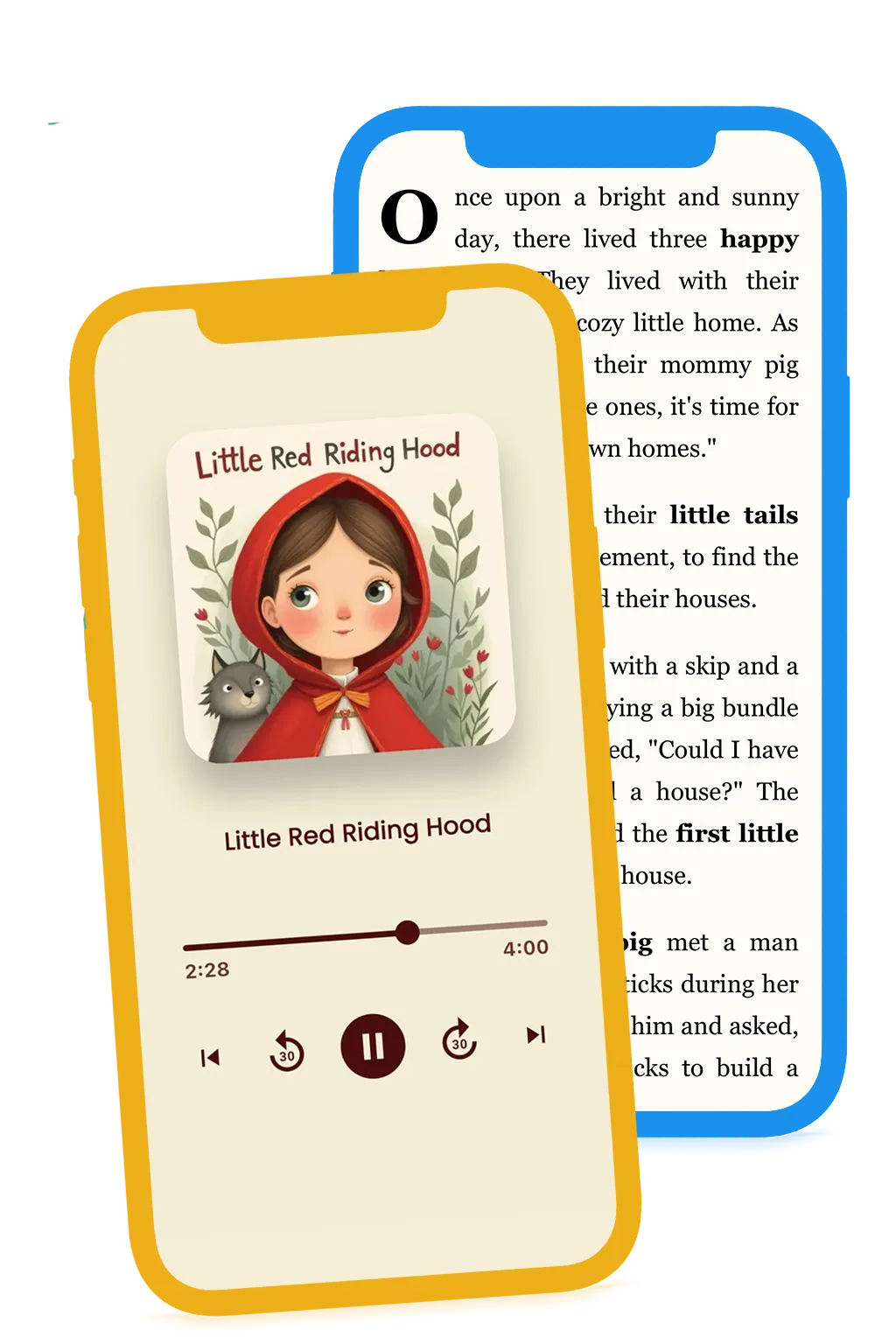
Super Stories app screenshot